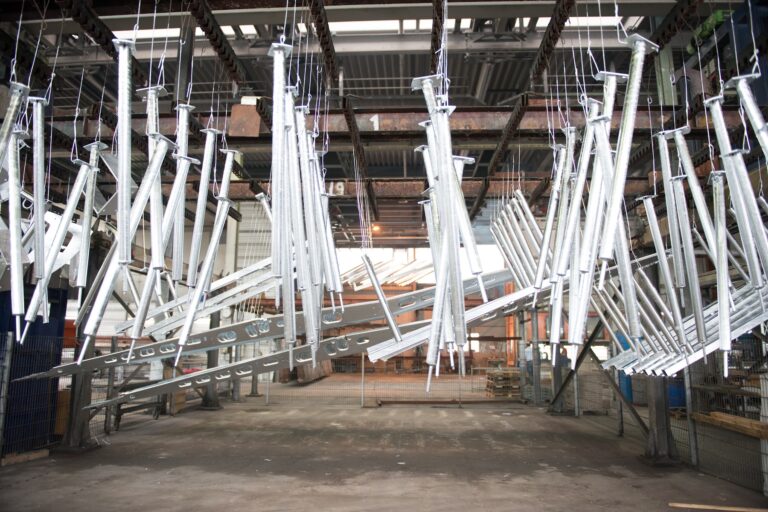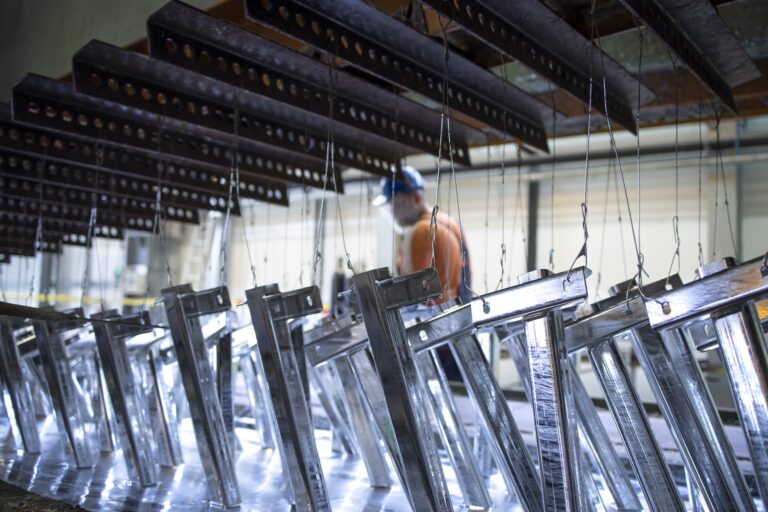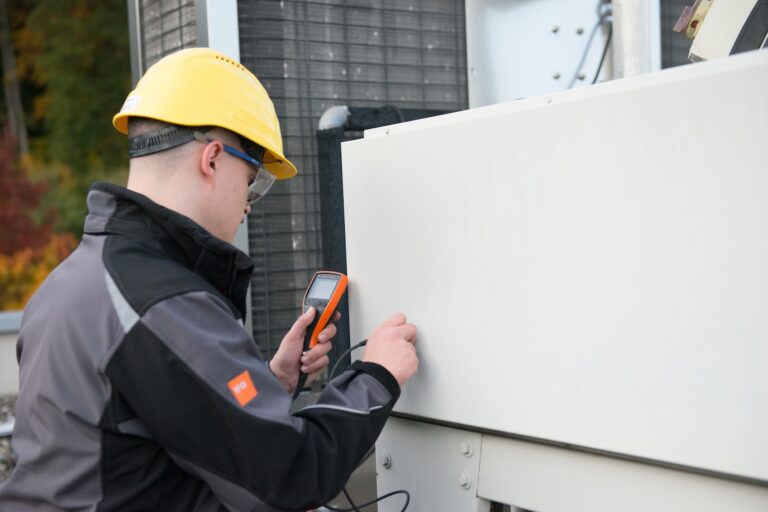
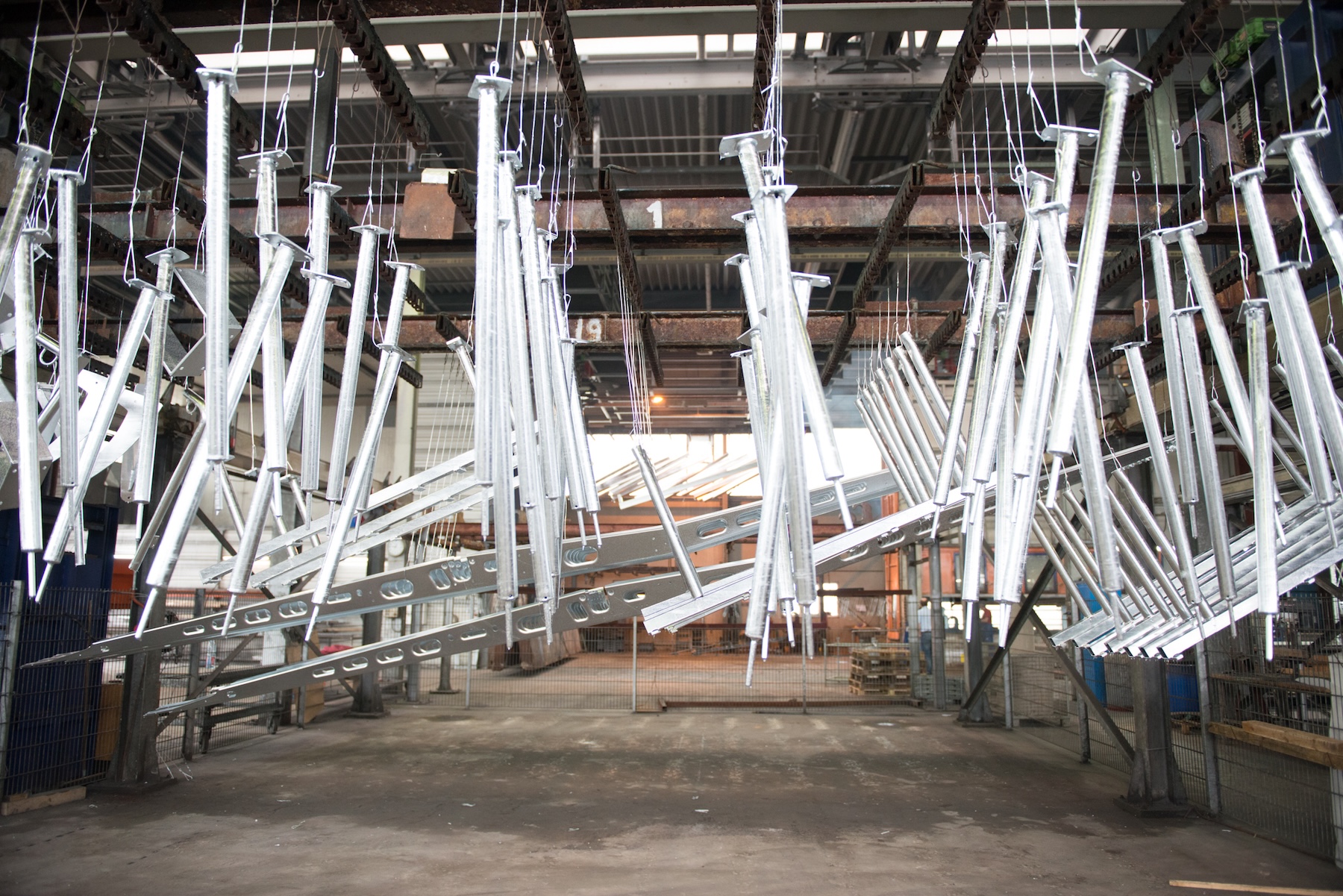
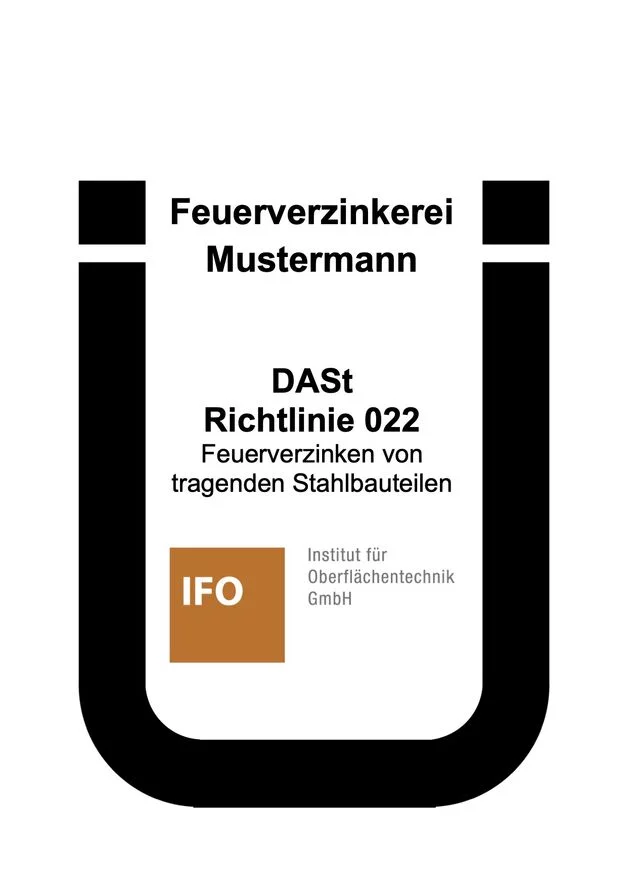
As a recognised testing and inspection body, we carry out certification in accordance with DASt Guideline 022. Our inspectors audit over 200 galvanising companies both nationally and internationally. Upon successful completion, the companies receive a certificate of conformity and are obliged to display the Ü mark.
DASt Guideline 022 was developed specifically for the hot-dip galvanising of load-bearing structural members designed and fabricated in accordance with DIN EN 1993 and DIN EN 1090. It sets out clear requirements and best practices to ensure that the structural safety and serviceability of hot-dip galvanised steel structures are not compromised by cracking during the galvanising process. The guideline supplements other generally applicable standards such as DIN EN ISO 1461 and meets all requirements in the field of building regulation.
The Ü mark, also known as the conformity mark, is an official marking symbol that is mandatory for certain construction products to confirm compliance with relevant legal requirements and standards. It serves as proof that the marked product complies with the prescribed safety and quality standards. The Ü mark is issued by recognised certification bodies which have assessed the relevant products and manufacturing processes in accordance with the legal requirements.
Hot-dip galvanising plants that process load-bearing components in accordance with DIN EN 1993 and DIN EN 1090 must qualify for certification in accordance with DASt 022. This certification enables them to demonstrate their quality standards and their commitment to compliance with safety requirements. This strengthens customer confidence and gives them valuable competitive advantages within the industry.
The clear guidelines set out in DASt Guideline 022 provide a reliable basis for designers and engineers who are designing load-bearing components in accordance with DIN EN 1993 and DIN EN 1090. These guidelines ensure that the structural safety and serviceability of the components remain unaffected during the galvanising process. This allows the benefits of hot-dip galvanising to be utilised without compromising on quality.
Manufacturers of load-bearing components in accordance with DIN EN 1993 and DIN EN 1090 must ensure that their components are prepared for the hot-dip galvanising process and meet the requirements of the standards. They are required to request proof of DASt 022 certification from hot-dip galvanising plants in Germany. For international clients and German companies alike, this ensures that the highest quality standards are maintained during the galvanising process.
Certification in accordance with DASt 022 requires compliance with certain criteria and the implementation of appropriate procedures to ensure that safety standards are met during the hot-dip galvanising of load-bearing components.
The certification of hot-dip galvanising plants in accordance with DASt Guideline 022 offers various advantages, including:
Certification in accordance with DASt Guideline 022 demonstrates to your customers and partners that you adhere to the highest quality standards and meet their requirements.
International companies that are certified in accordance with DASt Guideline 022 can position themselves as quality-conscious and reliable suppliers, thereby setting themselves apart from their competitors.
DASt Guideline 022 is mandatory in Germany and meets the building regulations set by the authorities and supervisory bodies. By obtaining this certification, you ensure that your company complies with all legal requirements and has no cause for concern regarding any complaints.
DASt Guideline 022 sets out clear safety guidelines and procedures to minimise potential risks in the galvanising process. Our experienced inspectors carefully check the in-house production control system and the zinc bath to ensure that all specifications are met and that the quality of your galvanising work is guaranteed.
DASt Guideline 022 sets out specific quality assurance requirements to ensure high-quality and consistent galvanising of load-bearing components. Some key requirements are listed below:
The zinc bath must have the correct composition in accordance with applicable standards and specifications. This includes the zinc content, alloying elements and impurities, which must fall within acceptable limits.
The temperature of the zinc bath must be maintained within a specified range to ensure optimum galvanising quality. Regular monitoring and calibration of the temperature measuring instruments are important.
Appropriate measures must be taken to monitor the quality of the zinc bath. These include regular analyses of the zinc bath composition, checks for contaminants and random sampling to assess the quality of the coating.
The plant equipment, including the tanks and hot-dip galvanising baths, should be sized and designed in accordance with the requirements to ensure efficient, high-quality galvanising.
It is of crucial importance to take the precise requirements of DASt Guideline 022 into careful consideration. Galvanising plants are required to analyse the guideline thoroughly and ensure that all specific requirements are met. This will ensure successful certification in accordance with DASt Guideline 022.
Put your trust in our expertise and experience in the certification of hot-dip galvanising plants. Contact us for further information and to arrange a consultation. We’re here to help! Get in touch now 07171 / 10407-0
Over 200 companies in Germany and abroad that are certified in accordance with DASt Guideline 022 clearly demonstrate this. You can find the full list of all DASt-certified companies here: https://ifo.le-an.net/zertifikate/
More than 200 certified companies place their trust in the expertise of the IFO Institute for Surface Technology. Join them and choose quality and reliability for your DASt 022 certification. Request a free quote now 07171 / 10407-0