As a certification body for metal fabrication companies in accordance with DIN EN 1090, the IFO Institute offers inspections as part of the supervision of in-house production control for metal fabrication products, steel structures and other metal structures. Through our national and international operations, we support metal fabrication companies in ensuring that their in-house production control and proof of conformity meet the requirements of the European standard. Our accreditation and notification in accordance with the EU Construction Products Regulation (EU) No 305/2011 (EU Construction Products Regulation) confirms our expertise and ensures that our certifications are recognised internationally.
The European standard DIN EN 1090 sets out detailed requirements for the declaration of conformity for steel components, aluminium components and kits that are placed on the market as metal construction products. Compliance with this standard is of crucial importance for metal construction companies, as it ensures the quality and safety of their structures. The proof of conformity covers not only manufacturing characteristics but also load-bearing characteristics, where required. Furthermore, the standard addresses the proof of conformity for steel components used in composite steel and concrete structures. Components may be used either directly, incorporated into structures or supplied as kits.
The application standards for steel construction work are set out in DIN EN ISO 1090-2. Aluminium structures, on the other hand, are governed by DIN EN 1090-3.
The DIN EN 1090 standard applies to all load-bearing metal structures, regardless of whether they are mass-produced or made to order. It also applies to kits that enable the construction of various structures. The components may be manufactured from various structural materials, including hot-rolled or cold-formed steel, as well as using other technologies. The scope of the requirements for factory production control depends on the respective execution classes (EXC).
The manufacturer or its authorised representative established within the European Economic Area is responsible for affixing the CE marking. A valid certification in accordance with DIN EN 1090-1 is a prerequisite for this. In doing so, the manufacturer confirms compliance with all applicable requirements of the European Construction Products Regulation. Furthermore, by affixing the CE marking, the manufacturer assumes responsibility for ensuring that the construction product delivers the declared performance.
There are four performance classes: performance classes EXC 1 (components subjected predominantly to static loads, with minor consequences of failure) to EXC 4 (components with extreme consequences of failure for people and the environment). The requirements for staff qualifications and the manufacturer’s technical equipment increase from EXC 1 to EXC 4.
The performance classes (EXC) essentially determine the monitoring intervals for active certification.
| Performance class | Standard monitoring intervals following the initial inspection (in years) |
|---|---|
| EXC1 and EXC 2 | 1 – 2 – 3 – 3 |
| EXC3 and EXC4 | 1 – 1 – 2 – 3 – 3 |
Optimise your in-house production control and obtain proof of conformity in accordance with DIN EN 1090. Find out more about our certification services! Arrange a consultation now 07171 / 10407-0
Certification to DIN EN 1090 is mandatory for all structural steelwork contractors under the EU Construction Products Regulation (EU) No 305/2011. Certification to DIN EN 1090 offers numerous additional benefits for structural steelwork contractors, including:
Certification to DIN EN 1090 enables metal fabrication companies to demonstrate that they meet the standard’s strict quality and safety requirements, thereby ensuring the conformity of their products.
Certification builds trust with customers, as it demonstrates that a metal fabrication company meets the required standards. This strengthens customer loyalty and enhances competitiveness in the market.
The implementation of an efficient quality management system in accordance with DIN EN 1090 helps metal fabrication companies to continuously improve their product quality by introducing clearly defined processes and control mechanisms.
In-house production control in accordance with the standard enables metal fabrication companies to improve the efficiency of their production processes by identifying and optimising areas for improvement.
Certification to DIN EN 1090 opens doors to national and international markets, as many clients and public sector organisations require compliance with this standard as a prerequisite or stipulate it as a condition for awarding contracts.
Certification to DIN EN 1090 ensures that metalworking companies meet the specific requirements of clients and public bodies regarding metalwork, which stipulate compliance with the standard as a prerequisite for the award of contracts. This facilitates access to lucrative projects.
The IFO Institute is a recognised and accredited certification body. Our experienced inspectors carry out comprehensive assessments of in-house production control and verify compliance with the requirements of the standard.
Benefit from successful certification to DIN EN 1090. Contact us today to find out more about our services. The key requirement for certification and the monitoring of in-house production control is a quality assurance system established by you, which is operational and documented in writing in accordance with DIN EN 1090-1.
Coating plays an important role in the DIN EN 1090 standard, as it has a decisive influence on the protection and durability of metal components. According to the standard, components must either be unprotected or protected against corrosion by a coating or other surface treatment.
With the EN 1090 certificate issued by the IFO Institute for Surface Technology, you can reliably demonstrate to your customers that the requirements of DIN EN 1090 regarding your quality assurance and the coating process are met.
The coating serves to protect the metal from harmful factors such as corrosion, wear and tear, chemical substances and the effects of the weather. It forms a barrier between the component and its surroundings, preventing the ingress of moisture, oxygen and other harmful elements that can lead to corrosion.
The DIN EN 1090 standard sets out specific requirements for coatings to ensure that their protective function is guaranteed. This includes the selection of suitable coating systems, the proper preparation of the surface prior to application, and the verification of the coating’s adhesion, thickness and quality.
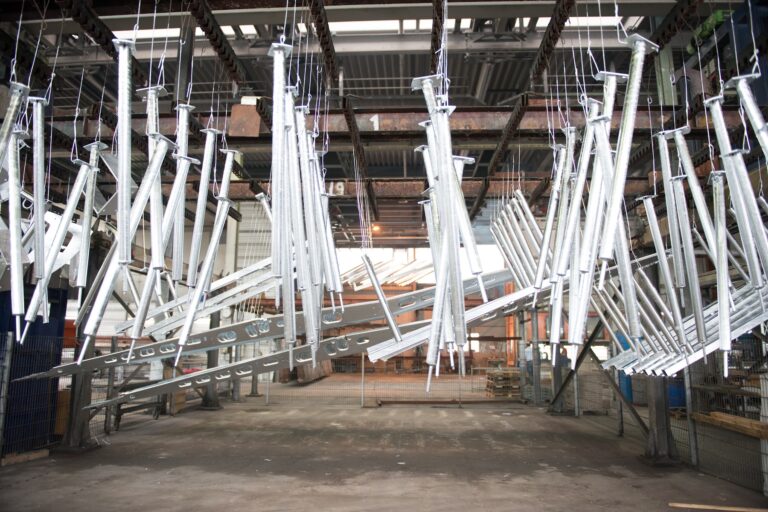
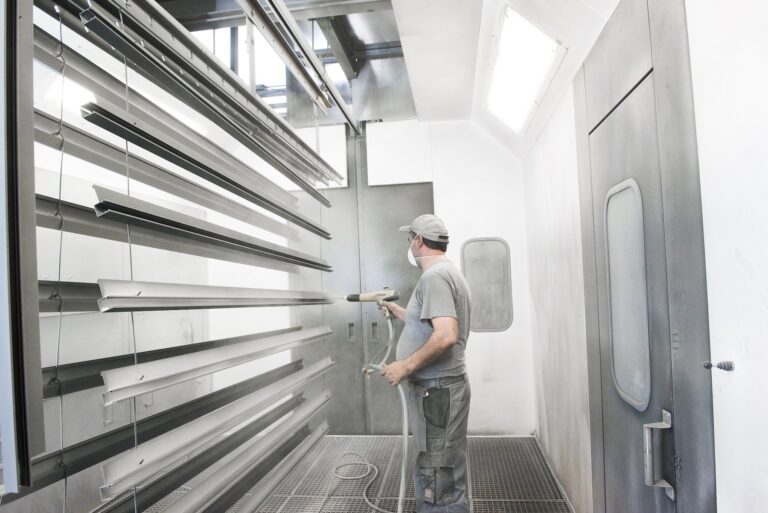
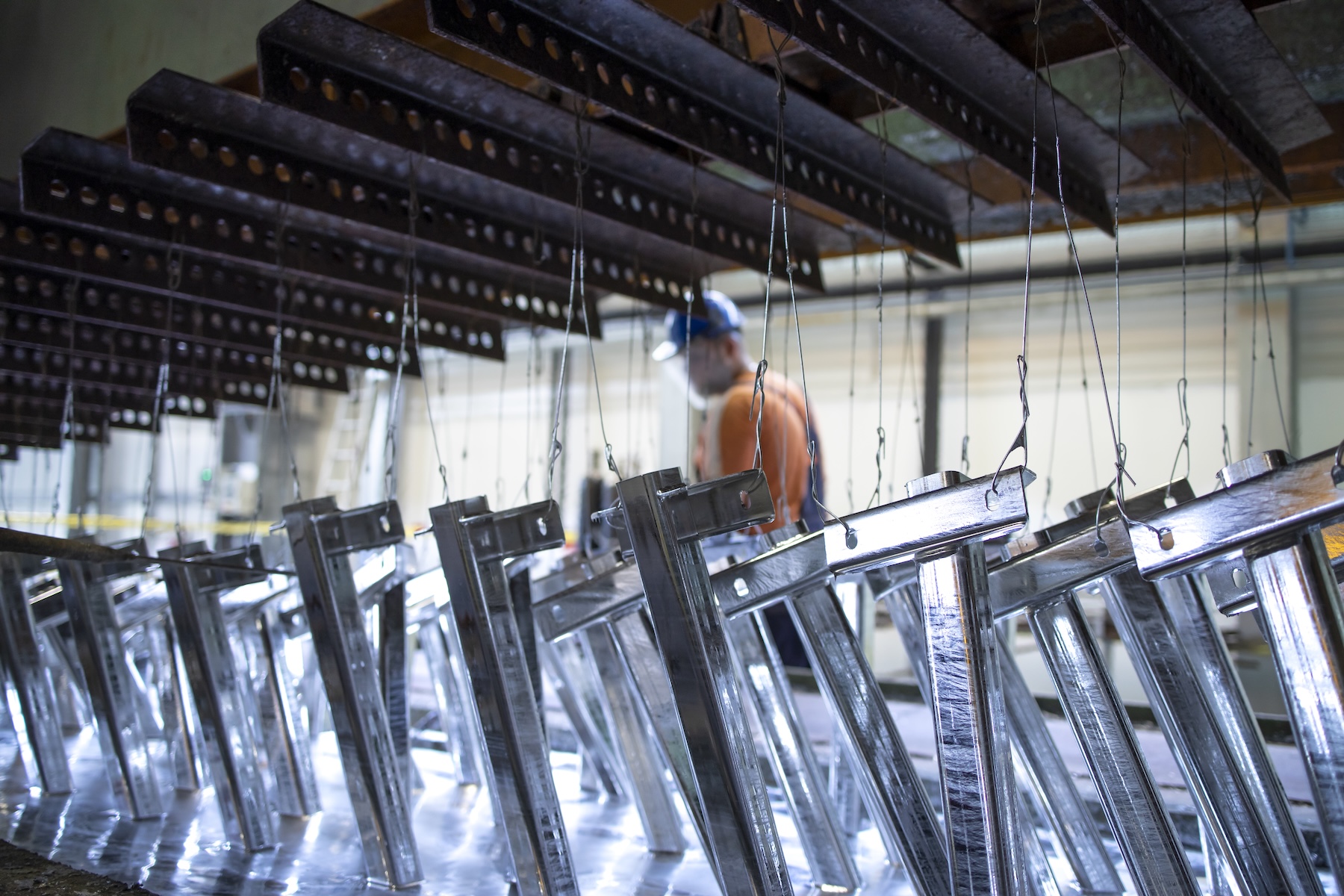
The standard also defines various types of coatings, which can be selected according to the requirements of the component. These include, amongst others, powder coatings, liquid paint coatings, hot-dip galvanising and other specialised coating methods.
Proper coating in accordance with the requirements of the DIN EN 1090 standard is crucial to ensuring the quality and durability of metal components. Applying the coating correctly can extend the service life of the components, reduce maintenance costs and achieve an aesthetically pleasing appearance.
Metal fabrication companies certified to DIN EN 1090 must ensure that they, or their suppliers, comply with the requirements relating to coating. This includes selecting suitable coating systems, training staff in the correct application of the coating, and carrying out regular quality controls to ensure that the coating meets the required standards.
Overall, coating plays a key role in the DIN EN 1090 standard, as it ensures the protection and durability of metal components and thus helps to meet quality and safety requirements. With the coating certificate from the IFO Institute for Surface Technology, you can reliably demonstrate to your customers that your quality assurance and coating systems comply with the requirements of DIN EN 1090.
Improve the quality, safety and competitiveness of your metal fabrication business and find out more about DIN EN 1090 certification through the IFO. Get a free consultation now 07171 / 10407-0